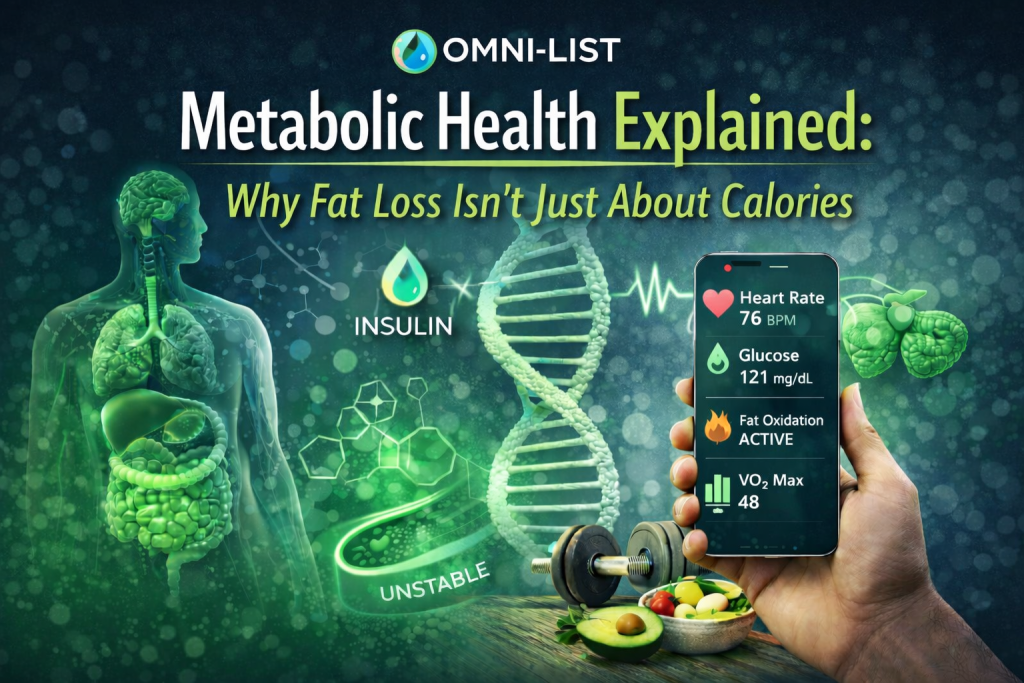
Metabolic Health Explained: Why Fat Loss Isn’t Just About Calories
For years, fat loss has been reduced to a simple formula: eat fewer calories and move more. While calories do matter, this explanation leaves out a much bigger piece of the puzzle — metabolic health.
If fat loss were only about calories, everyone following the same deficit would see similar results. In reality, progress varies wildly. Some people lose fat steadily, others stall despite doing “everything right,” and many feel drained long before they see results.
The difference often comes down to how efficiently the body manages energy, hormones, and fuel — in other words, metabolic health.
instead of chasing shortcuts, Let’s try to understand what’s actually happening beneath the surface.
What Metabolic Health Really Means
Metabolic health refers to how well your body:
Regulates blood sugar
Responds to insulin
Uses fat and carbohydrates for energy
Manages hunger and satiety
Maintains stable energy levels
A metabolically healthy body can switch between fuel sources efficiently. This flexibility makes fat loss more sustainable and training more productive.
When metabolic health declines, the body becomes less efficient at using stored fat — even in a calorie deficit.
Why Calories Alone Don’t Explain Fat Loss
Calories measure energy intake, but they don’t account for:
Hormonal responses
Insulin sensitivity
Stress and cortisol levels
Sleep quality
Muscle mass
Two people eating the same number of calories can experience completely different outcomes based on these factors.
When insulin remains elevated for long periods, fat release from storage becomes more difficult. When stress and sleep deprivation enter the picture, appetite increases while energy expenditure often drops.
This is why fat loss isn’t just about how much you eat — it’s about how your body processes what you eat.
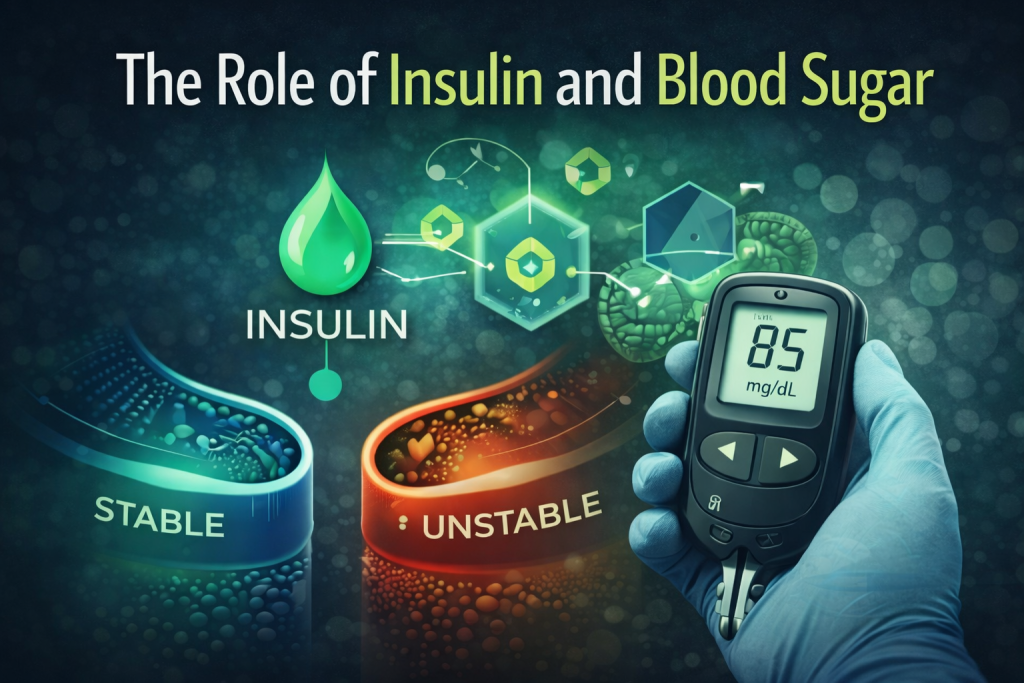
Insulin Sensitivity and Fat Storage
Insulin plays a central role in metabolic health. Its job is to move glucose from the bloodstream into cells. When insulin sensitivity is high, this process works smoothly.
When insulin sensitivity declines, the body compensates by producing more insulin. Elevated insulin levels signal the body to prioritize storage over fat burning.
That’s why Improving insulin sensitivity is necessary as it results in:
Lower baseline insulin levels
Increase access to stored fat
Improve energy stability
Reduce constant hunger
This is one reason approaches like carbohydrate control and ketosis can be effective tools when used appropriately.
Metabolic Flexibility: The Missing Skill
Metabolic flexibility is the ability to switch between carbohydrates and fat as fuel based on availability and demand.
A metabolically flexible body can:
Burn carbs during intense activity
Shift to fat at rest or during fasting
Maintain energy without constant snacking
When flexibility is lost, the body becomes overly dependent on frequent carbohydrate intake, leading to energy crashes and persistent hunger.
This concept connects directly to how ketosis works, which is explored in more depth in Keto Diet Explained: How Ketosis Helps Weight Loss & Fitness.
Muscle Mass and Resting Metabolism
Muscle isn’t just for strength or appearance — it’s metabolically active tissue.
Apart from the uneducated belief that still exists within society that muscle somehow is all for you and has no benefit apart from aesthetics, strength and an inflated ego. Higher lean mass actually supports:
Greater resting energy expenditure
Better glucose uptake
Improved insulin sensitivity
Long-term fat loss maintenance
This is why resistance training plays such a critical role in metabolic health, especially for experienced lifters who want to stay lean without extreme dieting.
Fat loss without muscle preservation often leads to metabolic slowdown, making future progress harder.
Stress, Sleep, and Hormonal Impact
Now, comes the part majority of the population suffers from Inadequate sleep, High stress environments and hormones. Metabolic health doesn’t exist in isolation.
Chronic stress and poor sleep elevate cortisol, which can:
Increase appetite
Promote fat storage
Reduce insulin sensitivity
Impair recovery
Even the most structured nutrition plan can struggle when sleep and recovery are consistently neglected.
Improving sleep quality and managing training volume are often overlooked, but they have a direct impact on fat loss outcomes.
What the Research Shows
Studies consistently show that metabolic markers — not just calorie intake — influence fat loss and health outcomes.
Insulin resistance is strongly linked to increased fat storage and metabolic dysfunction (NEJM, 2005)
Improved insulin sensitivity enhances fat oxidation and energy balance (AJCN, 2018)
Resistance training improves glucose control and metabolic rate independently of calorie restriction (J Appl Physiol, 2012)
These findings reinforce the idea that how the body responds to food matters as much as the food itself.
Our Focus:
the focus should never be to rely on extremes. Metabolic health improves when habits support the body instead of fighting it.
That means:
Prioritizing whole, nutrient-dense foods
Supporting muscle through resistance training
Allowing recovery and quality sleep
Using strategies like carbohydrate control or ketosis thoughtfully — not blindly. if you do opt for a keto diet. However, even that isn’t necessary a balanced diet can work just as well provided you keep every other factor in check.
- Some diets can be an extremely helpful tool. However, any diet used as a shortcut will eventually not work.
Fat loss becomes more sustainable when the body is metabolically prepared to let go of stored energy.