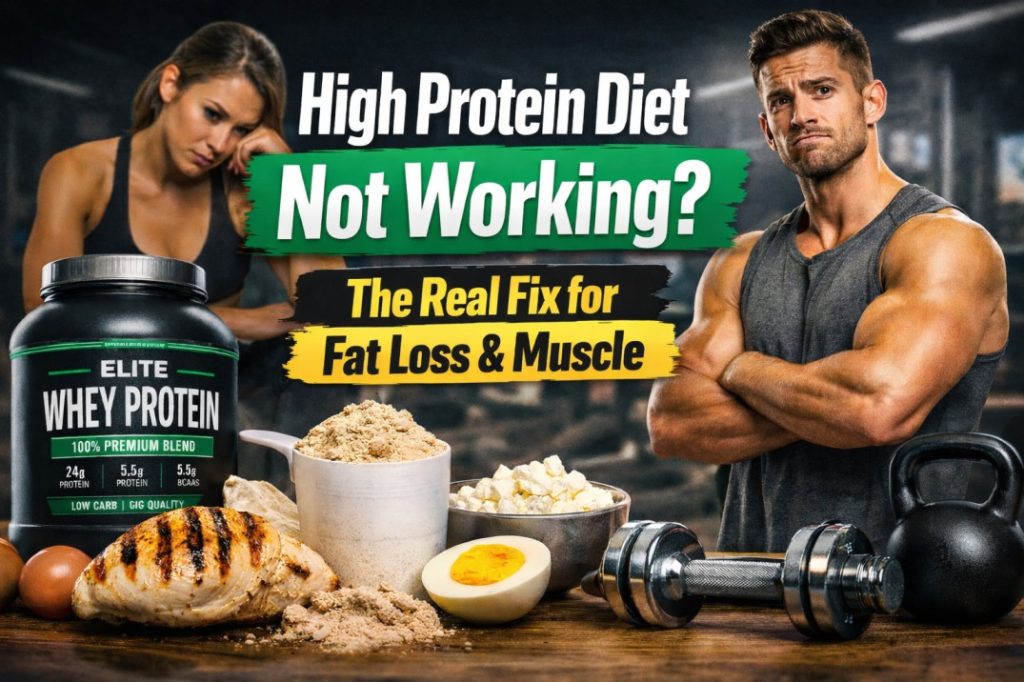
A high protein diet is supposed to help you lose fat and build muscle. So when the scale doesn’t move, strength stalls, or your body doesn’t change, frustration sets in quickly.
If your high protein diet isn’t working, the problem usually isn’t protein itself—it’s how protein is being used. In this guide, we’ll break down why protein alone often fails, the most common protein diet mistakes, and what actually drives fat loss and muscle growth.
Why Is My Diet Not Working? Even Though It’s High In Protein
A high protein diet often fails when protein intake is not paired with proper training, total calorie control, and recovery. Protein supports muscle and fat loss, but it cannot replace structured workouts, balanced meals, and progressive overload.
Why Protein Alone Doesn’t Guarantee Results 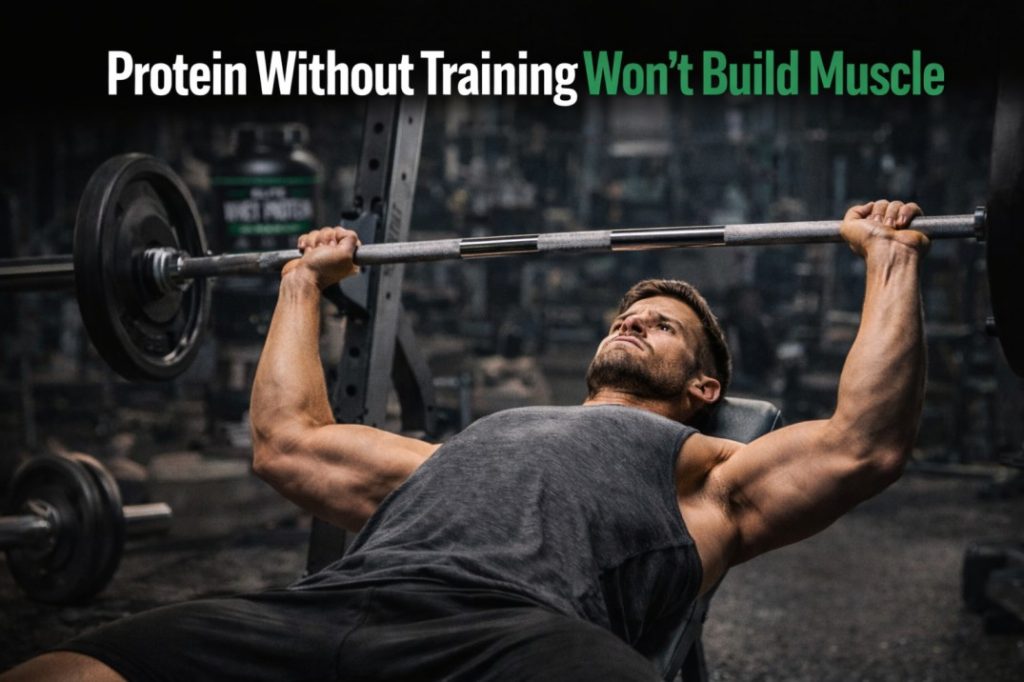
Protein is an essential nutrient, but it’s not a magic solution. Many people assume increasing protein automatically leads to fat loss or muscle gain, but results depend on context.
Without proper training stimulus, calorie control, and recovery, protein has nothing to support. In these cases, increasing protein intake simply adds calories without improving body composition.
Why Protein Isn’t Helping You Lose Fat
You might have heard a lot about how protein can help you stay satiated and burn fat. That’s not untrue but it can be misleading if you don’t understand how protein works in the first place.
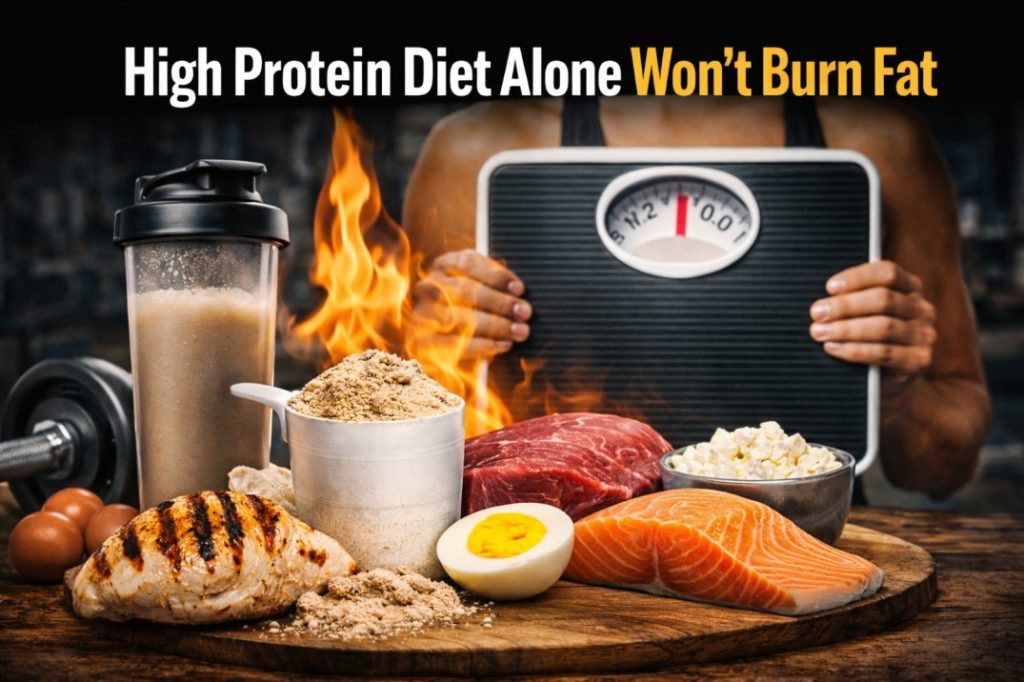
Protein can support fat loss by increasing satiety and preserving muscle, but fat loss still depends on total energy balance.
If overall calories are too high, fat loss will not occur—regardless of how much protein you eat. A high protein diet that ignores portion control or food quality often stalls progress.
Why Can’t I Build Muscle Even Though I’m On A High Protein Diet?
Muscle growth requires resistance training, not just nutrition. Protein provides the building blocks, but without progressive overload, muscle tissue has no reason to grow
Many people consume enough protein but fail to challenge their muscles consistently. In that situation, protein intake alone cannot stimulate muscle development.
If muscle growth is your goal, pairing proper protein intake with effective resistance training—such as focused biceps exercises for bigger arms—creates the stimulus protein needs to support real size gains.
Common High Protein Diet Mistakes That People Make
Several mistakes prevent high protein diets from delivering results:
• Relying too heavily on protein shakes instead of whole foods
• Ignoring total calorie intake
• Eating protein without proper training stimulus
• Poor recovery and sleep habits
• Inconsistent daily intake
Fixing these issues often restores progress quickly or in most cases starts showing finally.
What Actually Builds Muscle & Burn Fat
Real results come from aligning nutrition with training and recovery.
Protein works best when paired with structured resistance training, controlled calorie intake, adequate sleep, and progressive overload. When these factors play a crucial role in both building muscle and fat loss.
Strength training built around compound movements, including proven best chest exercises to build chest size, plays a key role in creating the training demand protein supports.
Take Protein the Right Way
To get results from a high protein diet:
• Prioritize whole food protein sources
• Distribute protein evenly across meals
• Match intake to training demands
• Avoid relying solely on supplements
• Support protein intake with proper workouts
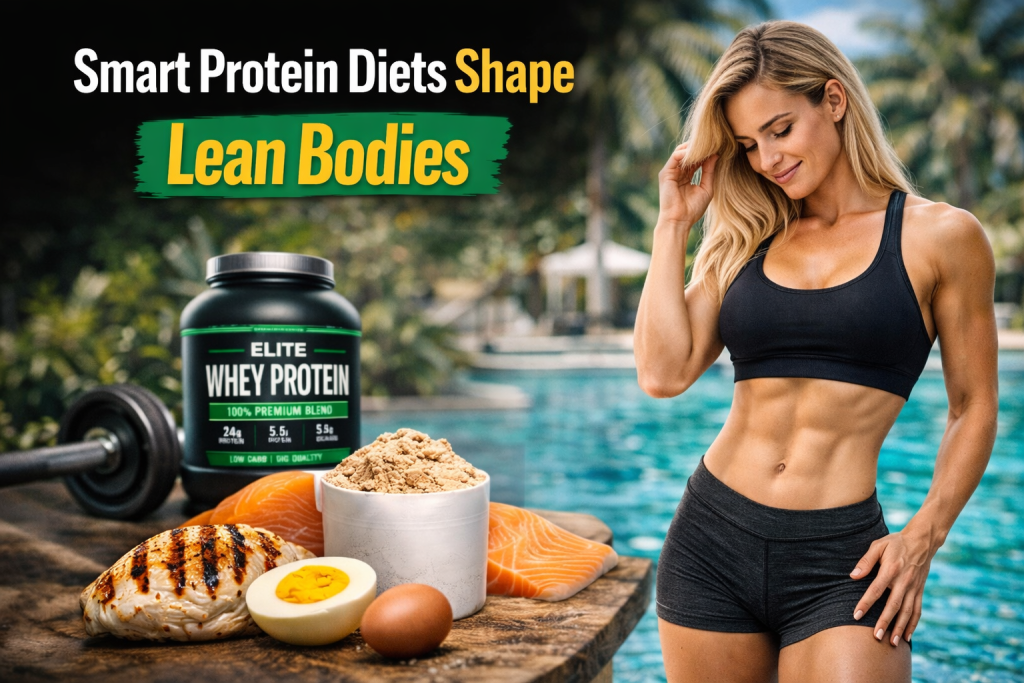
When protein is used as part of a complete system, progress becomes consistent.
When protein intake is aligned with smart training and recovery principles outlined in a complete guide on how to get a lean toned body, results become far more consistent and sustainable.
Frequently Asked Questions About High Protein Diets
Why isn’t protein helping me lose fat?
Protein supports fat loss, but calorie balance still matters. Eating too many calories can stall fat loss even with high protein intake.
Can you build muscle on a high protein diet alone?
No. Muscle growth requires resistance training. Protein alone cannot stimulate muscle development.
Is more protein always better?
There is a point of diminishing returns. Excess protein adds calories without additional benefits.
Should I use protein shakes or whole food?
Whole food protein sources are generally more filling and nutritionally complete than shakes. However, Protein powder can be an excellent tool especially when trying to cut and on a caloric deficit but only as a supplement not a meal replacement.